History of The Fontana Club
at Glenwood Springs
When looking back at the history of Geneva Lake, most people think first of the incredible estates built by Chicago families after the Great Chicago Fire. Those homes helped shape the identity of the lake and created a legacy that is still admired today. But in 1892, something different and important took place along the shore. Glenwood Springs became the first planned development on Geneva Lake designed to allow the “average man” the opportunity to own a lake home, not through private lake frontage but by sharing the shoreline as a community.
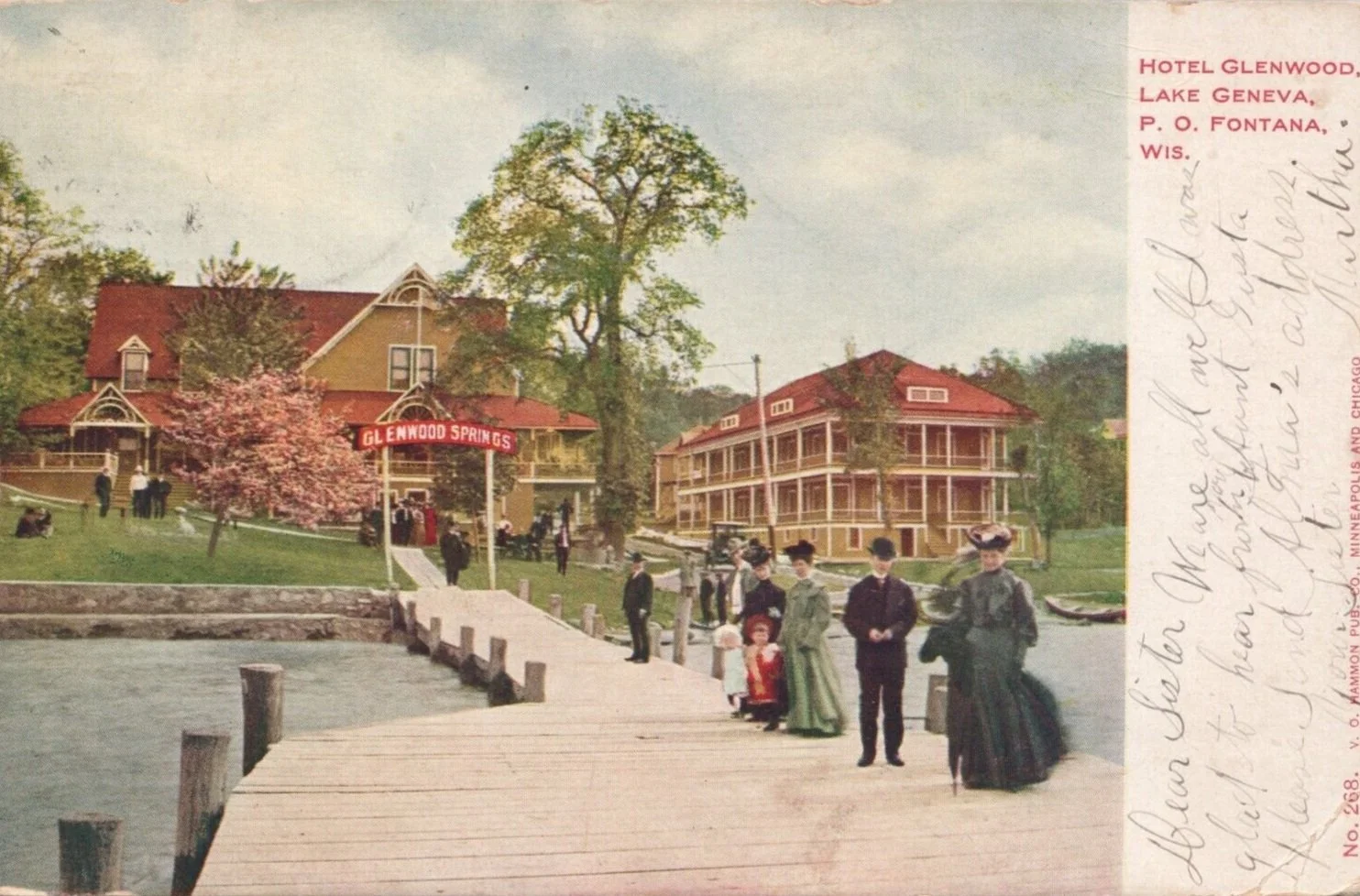
Hotel Glenwood 1910

Fontana Club Condominiums 2026
Glenwood Springs was believed to have three mineral springs running through the property, producing up to 50,000 gallons of water a day. Many claimed the water had healing or medicinal benefits, making the area a desirable destination long before the development took shape. At that time, boats stopped regularly at Glenwood Springs, and trains arrived to the north, at the Williams Bay depot.
Before Glenwood Springs became a platted community, the land was occupied by the Potawatomi tribe, and this location is believed to be where Geneva Lake, then called Big Foot Lake, was first seen by early explorers in 1831. It was here that a trailhead led travelers to Lake Michigan, Chicago, and beyond, which gave the area more importance than you might expect for its size.
When Glenwood Springs was developed by the Lake Geneva Land Co, it originally included approximately 187 lots, measuring 40x95 feet, laid out in a 17-block area. A carefully planned shoreline park, 1,500 feet wide, was dedicated to the community rather than individual owners. Their marketing promised that “the price of lots would be within reach of men of moderate means,” and that each would share “over 1,500 feet of shoreline.”
One advertisement proudly stated “A man doesn’t have to be a multi-millionaire to enjoy Glenwood.” In 1892, the bylaws stated:
No barns could be built on the grounds
No intoxicating liquors could be sold
Taxes were $2.00 per year per lot to maintain the parks, walks, and drives. For those who brought horses, the developers offered 25x30 horse lots south of the boulevard for $25, or boarding in the “company barn.” A dining hall offered 14 guest rooms with “good, wholesome cooked meals,” and the shoreline was promoted as safe for swimmers. Steamboats could come within 100 feet of the shore, making arrival by water a common way to access this growing destination.
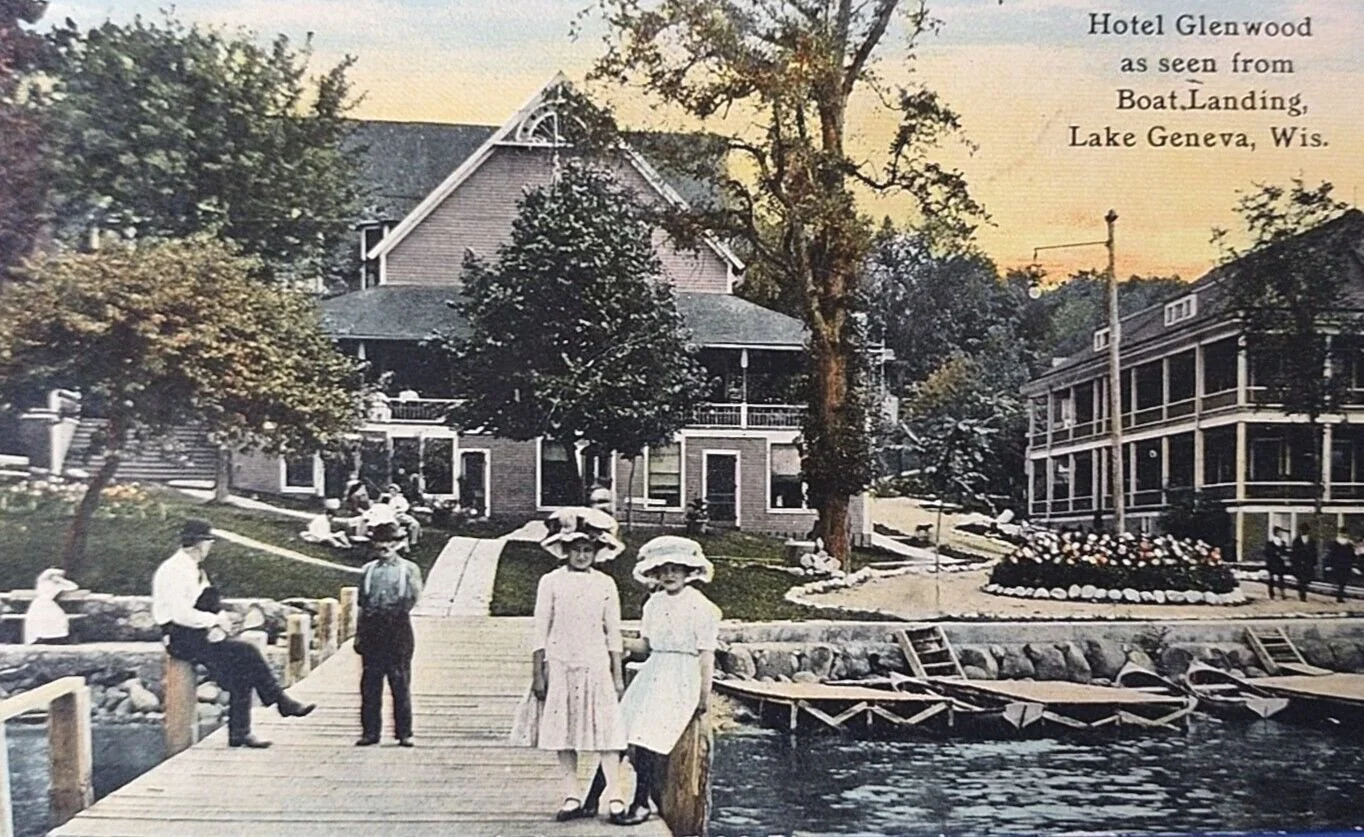
The Fontana Hotel was built at the heart of Glenwood Springs, right along the lakefront. Guests arrived by steamboat, stepping directly onto the large pier in front of the hotel. An annex to the west added rooms as the area’s popularity grew. In 1894, the hotel burned down, but the Annex stood for over a century. In 1999, the annex was torn down and replaced by the Fontana Club Condominium, built on the original footprint of the annex hotel. While the historic building had open wraparound porches, the new design leaned toward interior space rather than outdoor balconies. The development initially included eight condominiums and a single-family home at 431 Harvard, for a total of nine residences. Over time, two condo owners expanded their units by combining with adjacent ones, resulting in the six condominiums and the single-family home that exist today.
Glenwood Springs didn’t just create a community, it created a model. Other planned developments followed, including Indian Hills and Cedar Point Park, both offering shared shoreline and community amenities as an alternative to owning private frontage. That idea still resonates today, especially as Geneva Lake continues to be one of the most desirable destinations in the Midwest.
Today, the community consists of 140 homes located on both sides of Lake Shore Drive. For residents without private piers, buoys and boat slips are available through waiting lists, and the neighborhood offers two community swimming piers. Its location near Fontana Beach, as well as restaurants like Chuck’s and Gordy’s, keeps it connected to the heart of lake activity. Glenwood Springs is also home to the Fourth of July fireworks over Geneva Lake and the Lobster Boil over the last weekend in July.
More than 130 years after it was first imagined, Glenwood Springs remains an example of how shared lake access shaped the character and future of Geneva Lake communities. The idea that the beauty of the lake could be enjoyed collectively rather than privately, continues to define this neighborhood and other areas inspired by its vision.
Sources: Geneva Lake, Stories from the Shore by Anne Celano Frohna, Barb Krause, Jamie Rhodes, Lisa M. Schmelz; Finding Fontana: Celebrating a Century of Community by Margaret Reuland; Village of Fontana.Restrictions listed at the time were that “no barns could be erected on the grounds, (and) no intoxicating liquors could be sold,” Taxes were $2.00 per year on each lot to maintain parks, walks, and drives. For those looking for accommodations for horses, they offered 25x30 foot horse lots south of “the boulevard” for $25 or care was available in the “company barn” for owners.